
Maoist Leader Devuji has surrendered to authorities in Hyderabad, marking a major shift in regional security dynamics. The surrender signals a weakening of Maoist influence in key areas. Officials confirmed the development within the last 24 hours. This event has drawn attention from security agencies and political leaders alike.
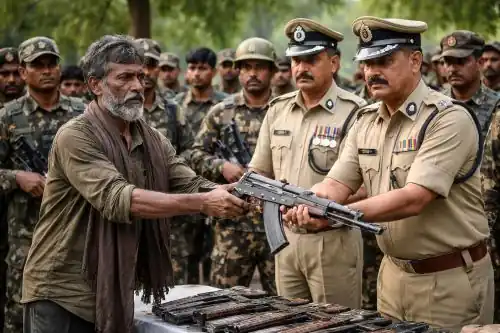
Devuji held a top position in the Maoist structure. He operated in forest regions and coordinated several operations. His surrender reflects growing pressure from security forces. It also shows the impact of ongoing rehabilitation efforts.
Background of Maoist Leader Devuji
Maoist Leader Devuji built his reputation over many years. He joined the movement at a young age. Over time, he gained trust among senior leaders. He handled critical operations and logistics.
Authorities tracked his movements for years. Intelligence teams gathered data through multiple sources. Devuji often changed locations to avoid capture. Despite his efforts, the security network continued to tighten around him.
Circumstances Behind the Surrender
Officials say Devuji chose to surrender due to increasing pressure. Continuous operations by security forces limited his mobility. Supply lines weakened. Communication channels also faced disruption.
Family influence played a role in his decision. Officials reached out to his relatives. They encouraged him to return to normal life. Rehabilitation programs also offered a safe path forward.
Security officers ensured a secure surrender process. Devuji met senior officials and handed over his weapons. The authorities followed standard procedures. They documented the surrender and initiated legal steps.
Government Response and Strategy
The Telangana government welcomed the surrender. Officials described it as a major success. They credited consistent efforts by police and intelligence teams.
Authorities continue to promote surrender policies. These policies offer financial aid and support. They also include job training and education opportunities. The aim is to help former cadres reintegrate into society.
Senior police officers stated that such surrenders weaken insurgent networks. Each surrender reduces operational strength. It also boosts morale among security forces.
Impact on Regional Security
The surrender of Maoist Leader Devuji will likely impact regional security. His exit creates a leadership gap. It disrupts coordination within Maoist groups.
Security agencies expect more surrenders in the coming months. Continuous pressure and awareness campaigns may encourage others to follow. The government plans to expand outreach programs in sensitive areas.
Experts believe that this development could reduce violence. It may also improve trust between local communities and authorities. People in affected regions often face hardships due to conflict.
Rehabilitation and Future Plans
Authorities have placed Devuji under a rehabilitation program. Officials will provide counseling and support. They aim to help him adapt to civilian life.
The program includes skill development training. It also offers financial assistance. Officials monitor progress to ensure long-term success.
Rehabilitation plays a key role in anti-insurgency strategy. It reduces the chances of rejoining militant groups. It also promotes stability in affected regions.
Public Reaction
The public response remains mixed. Some people welcome the move. They see it as a step toward peace. Others remain cautious. They want to see long-term results.
Local communities often face the direct impact of insurgency. Many residents hope for lasting peace. They expect authorities to maintain security and development.
Expert Opinions
Security experts view this surrender as a positive sign. They highlight the importance of sustained efforts. Experts also stress the need for development programs in remote areas.
Economic growth can reduce the appeal of extremist movements. Access to education and jobs plays a key role. Authorities must focus on these aspects.
Conclusion
The surrender of Maoist Leader Devuji marks a turning point. It reflects the success of coordinated efforts by authorities. It also highlights the importance of rehabilitation programs.
Hyderabad has witnessed a significant development in its security landscape. Officials remain committed to maintaining peace. They continue to focus on long-term solutions.
The coming months will reveal the full impact of this surrender. For now, it stands as a major step toward stability and progress.