
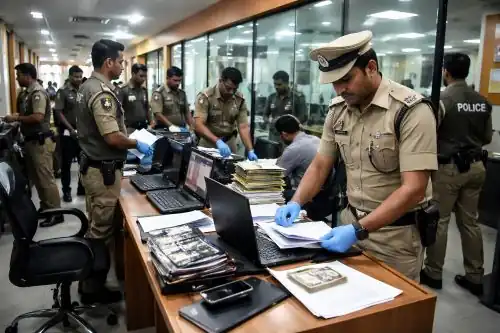
Hyderabad QNet Raid began early on Monday as the Central Crime Station moved across Telangana, Andhra Pradesh, and Karnataka in a coordinated action against QNet-linked locations. Early reports said the police deployed 25 teams for the operation, and they detained more than 20 people during the searches. Officials also said the probe grew out of multiple cases already registered against the company.
Hyderabad QNet Raid Draws Fresh Attention
The Hyderabad QNet Raid has pulled attention back to a case that police have tracked for years. According to Telangana police records from an earlier QNet matter, CCS had already examined complaints that accused people of running a bogus company, using motivation classes, and luring victims with promises of high returns. That earlier note also said investigators froze bank accounts and examined victims as part of the broader inquiry.
This latest round matters because it does not look like a routine local search. Police spread the operation across three states. They also moved against offices and related locations at the same time. That kind of approach usually signals that investigators want documents, devices, and witness statements before suspects can coordinate their stories. In a case like this, speed matters. So does surprise.
How The Multi-State Operation Unfolded
Reports from Hyderabad say CCS teams worked in Hyderabad, Visakhapatnam, and Bengaluru. One report said officers targeted 25 locations linked to QNet. Another said the department used 25 special teams to carry out the searches. The operation also led to detentions, though the early count varies by report. Some updates say police took 20 people into custody, while others put the number at over 20 or even 30.
The Hyderabad QNet Raid also appears to focus on the paper trail. Hyderabad Mail reported that police seized electronic devices and key documents during the searches. That detail matters because digital records often show how money moved, who recruited whom, and which accounts received payments. In a multi-level marketing case, those records can shape the entire case.
What Police May Be Looking For
In a case like this, investigators usually look for three things: money flow, recruitment links, and communication records. Money flow shows how much money entered the system and where it went. Recruitment links show who brought in new members. Communication records can expose coaching, inducement, and instructions shared inside the network. The Hyderabad QNet Raid seems built around all three. That is why the seizure of phones, laptops, ledgers, and account data often matters more than a quick arrest count. This is an inference based on the reported search pattern and the materials police said they seized.
Why QNet Stayed On The Radar In Hyderabad
QNet has remained under scrutiny in Hyderabad because earlier complaints already drew police action. The older CCS press note said officers had re-registered several crime numbers for further investigation and described a scheme that promised monthly returns to investors. It also said investigators examined victims and froze large amounts of money in related accounts. That history helps explain why the new Hyderabad QNet Raid landed so fast and with so many teams.
The company now faces a deeper credibility problem because the new operation builds on that earlier record. Telangana Today reported that the total number of CCS cases against QNet has now risen to eight. That figure suggests police are not treating the matter as one isolated complaint. They appear to be treating it as a wider financial fraud network that may have operated through multiple fronts and multiple cities.
What The Hyderabad QNet Raid Means For Investors And Agents
A case like this creates two kinds of risk. First, it raises legal risk for anyone who helped with recruitment, payments, or promotion. Second, it raises financial risk for people who joined after hearing claims of easy returns. In direct selling disputes, many people lose money because they trust a sales pitch more than a legal structure. The safest response is always the same: verify the company, verify the product, and verify the payment trail before sending money. This paragraph is general guidance, not a factual claim about this specific case.
The Hyderabad QNet Raid may also put pressure on the company to explain its network and its business model in public. If police document a pattern of inducement, hidden commissions, or fake promises, the case can expand quickly. That is why the current investigation matters beyond the immediate arrests or detentions. It could shape how authorities view similar MLM complaints in the future. This is an inference from the scope of the reported operation and the earlier police background.
What Happens Next
For now, police have not released the final picture. Early reports say more details are still awaited. That means the Hyderabad QNet Raid is still developing, and the next update may bring a clearer arrest count, seizure list, and case timeline. If investigators file fresh statements or produce additional documents, the scope of the probe could widen again. Until then, the current picture is clear enough: CCS has pushed the case into a large, multi-state enforcement phase.