
Top surrendered Maoist leaders of the banned CPI (Maoists), including Devji, held a meeting with Telangana Chief Minister Revanth Reddy in Hyderabad on Tuesday. During the discussion, the leaders requested an increase in their rehabilitation package from the existing ₹25 lakh to ₹1 crore. The meeting marks a significant step in the state’s ongoing efforts to encourage surrender and reintegration of former Maoist cadres.
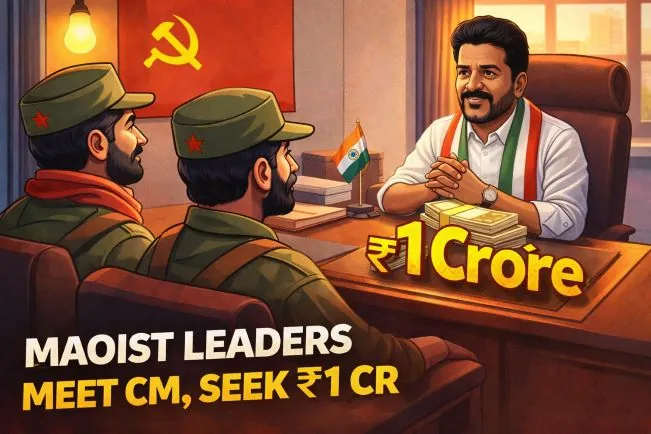
Officials said the surrendered leaders presented their case for a higher package, citing the challenges of reintegrating into mainstream society and the need for financial stability to support their families. The CM listened to their requests and assured them that the government would review the rehabilitation framework to balance justice, security, and social welfare.
Background Of The Rehabilitation Program
Telangana has implemented a structured rehabilitation program for surrendered Maoist leaders to facilitate their transition into normal life. The package includes financial assistance, skill development programs, and employment opportunities. Since the launch of this initiative, hundreds of Maoist cadres have surrendered, contributing to peace and security in the affected districts.
The existing rehabilitation package provides ₹25 lakh per leader, along with additional support such as housing and vocational training. However, surrendered leaders argue that the amount is insufficient to meet long-term needs, particularly for those who held senior positions and managed extensive organizational responsibilities.
Security And Administrative Perspective
State officials emphasized that the surrender and rehabilitation process follows strict security protocols. All surrendered leaders undergo debriefing and background checks before being integrated into the rehabilitation program. Authorities also ensure that financial assistance is used appropriately to support resettlement and livelihood initiatives.
“The state government has a duty to maintain peace while ensuring fair rehabilitation for those who leave extremist activities behind,” said an official who requested anonymity. “The meeting with the CM is part of a formal review process to address requests while safeguarding public interests.”
Social And Economic Impact
Experts say that offering a higher rehabilitation package can encourage more Maoist cadres to surrender voluntarily, reducing violent incidents in sensitive districts. Financial security and social reintegration help former cadres adapt to mainstream life and contribute positively to local communities.
Human rights advocates have supported rehabilitation programs, noting that economic stability is critical for successful reintegration. “Providing a reasonable package ensures that surrender is not just symbolic but a genuine opportunity for change,” said a social policy analyst in Hyderabad.
The proposed increase to ₹1 crore would make Telangana one of the most generous states in India for surrendered Maoist leaders. Officials are carefully evaluating the financial and social implications before making a final decision.
Political Significance
The meeting carries political significance as it highlights the Telangana government’s proactive approach to handling internal security and social reintegration. By engaging directly with surrendered leaders, CM Revanth Reddy demonstrates a commitment to peacebuilding while maintaining governance oversight.
Political observers note that such decisions often balance multiple objectives: security, public perception, and social welfare. “The government must show it can handle both law enforcement and humane rehabilitation,” said a political analyst familiar with Telangana’s policies.
Next Steps
The CM’s office has reportedly formed a committee to review the requests and suggest modifications to the existing rehabilitation scheme. The committee will consider factors such as prior rank within the organization, contributions to local communities post-surrender, and the potential impact on security and public perception.
Officials say that once the review is complete, the government will announce any adjustments to the financial package. Meanwhile, surrendered leaders are expected to continue participating in skill development and vocational training programs as part of their reintegration process.
Conclusion
The meeting between surrendered Maoist leaders and CM Revanth Reddy underscores Telangana’s commitment to peace, rehabilitation, and social reintegration. By addressing requests for an increased rehabilitation package, the state aims to balance security concerns with the welfare of individuals leaving extremist life behind.
Experts believe that if implemented effectively, the revised package could strengthen voluntary surrender initiatives, reduce insurgent activity, and contribute to long-term social stability. Hyderabad, as the state capital, continues to serve as the hub for these policy decisions, reflecting Telangana’s broader strategy to combine law enforcement with inclusive governance.