
Hyderabad: Telangana retirement dues took centre stage after the High Court ordered the state government to clear pending retirement benefits by April 9, 2026. The issue matters to thousands of retired employees across Telangana. In Hyderabad, the court’s sharp remarks turned this long-pending dispute into one of the most watched public interest stories of the day.
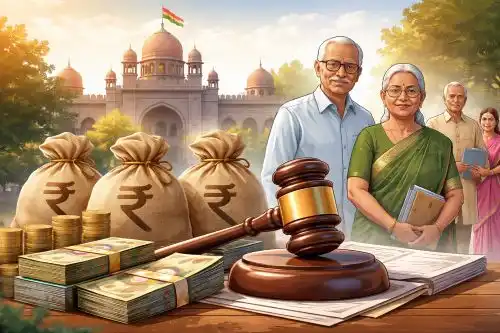
Justice N. Rajeshwar Rao heard contempt petitions filed by retired government staff who said they still had not received money due to them after retirement. During the hearing, the court made it clear that these payments are not a favour from the state. The judge stressed that retirees are asking for their own hard-earned money.
The state government informed the court that it had cleared dues for 1,056 retired employees out of a total of 3,656 cases. That still left more than 2,600 retirees waiting for settlement. The court did not accept any fresh delay lightly and fixed April 9, 2026 as the deadline for full compliance.
Reports from Hyderabad said the Finance Secretary, Sandeep Kumar Sultania, appeared virtually before the court. He told the bench that the government needed more time because of financial pressure and competing priorities. The court, however, refused to let the matter drift further. It warned that he may have to appear personally in future hearings if the government misses the deadline.
Why Telangana Retirement Dues Matter
Telangana retirement dues matter because retired employees depend on these payments for daily life. Many use the money for rent, health care, family support, and debt clearance. A delay in retirement benefits can shake a household very quickly.
For many families, retirement money is not an extra amount. It forms the base of financial planning after years of public service. That is why the High Court’s intervention carries such weight. The bench treated the delay as a serious failure, not as a routine administrative problem.
Some reports also noted a deeply troubling fact. More than 80 retired employees reportedly died while waiting for their dues. That detail added urgency to the case and sharpened public attention across Hyderabad and Telangana.
High Court Pressure Grows In Hyderabad
The court’s tone showed clear frustration. Over the last several months, it had already granted the government enough time to act. Even after earlier directions, many retirees remained unpaid. That pushed the issue into contempt proceedings.
The judge rejected the idea that retirement dues could wait behind other spending priorities. That point matters because it frames the issue in legal and moral terms. Retirement benefits belong to employees who completed their service. The government cannot treat those dues like optional payments.
In Hyderabad, this order now places direct pressure on the state administration. The warning of personal appearance by the Finance Secretary raises the stakes. It also signals that the court expects action, not another promise.
Telangana Retirement Dues And Employee Anxiety
This case has also created concern among serving government staff. Many employees watch retirement-related cases closely because they want confidence about their own future benefits. Delays at this scale can weaken trust in the system.
The issue links to wider debates on employee payments in Telangana. Recent discussions around pay scales, arrears, and other dues have already kept government finances under public scrutiny. Against that backdrop, the Telangana retirement dues case has become even more important.
Retired staff have approached the High Court over benefits such as gratuity, GPF, commutation, surrender leave, earned leave, and group insurance. These are standard entitlements tied to service. When such payments remain pending, retirees often face hardship at the exact stage of life when financial stability matters most.
What Happens Before April 9
The next phase is straightforward. The government must clear the pending amount before April 9, 2026. If it complies, the legal pressure may ease. If it fails, the case could move into a tougher stage before the High Court.
This deadline now serves as a public test of administrative seriousness. Retirees want closure. Families want certainty. The court wants compliance. Those three pressures now meet at one fixed date.
For Hyderabad readers, the story goes beyond one legal order. It speaks to governance, public accountability, and respect for workers who spent decades in service. That explains why the issue has gained such rapid attention across local news platforms.
Bigger Message From The Court
The High Court sent a message that reaches far beyond this case. Governments must honour retirement commitments on time. Courts will step in when long delays harm people who depend on these funds.
Telangana retirement dues now stand at the centre of that message. The phrase is not just a legal label. It reflects a real struggle faced by thousands of former employees and their families. In Hyderabad, the latest hearing turned that struggle into a deadline-driven issue with clear consequences.
As April 9 approaches, all eyes will remain on the state’s next move. A full payout would bring relief to thousands of retirees. Another delay could trigger stronger court action. Either way, this Hyderabad case has already become a major marker in the debate over employee welfare and state accountability in Telangana.