
The Chicken Shops Strike has triggered concern across Hyderabad. Traders announced the protest due to falling margins and rising operating costs. The issue affects hundreds of small businesses. It may also disrupt daily food supply across the city.
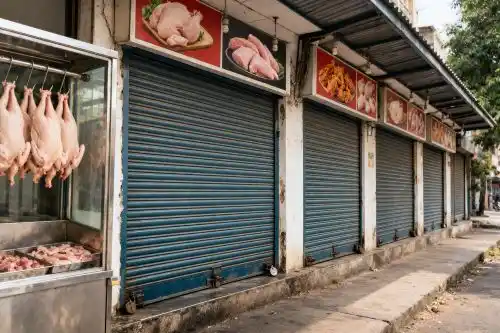
Local chicken vendors say profits have dropped sharply in recent months. At the same time, expenses continue to rise. Feed prices, transport costs, and electricity bills have increased. These pressures leave little room for profit.
Why Chicken Traders Announced the Strike
The Chicken Shops Strike reflects deep frustration among shop owners. Many vendors struggle to survive in the current market. Wholesale chicken prices fluctuate daily. Retail sellers cannot adjust prices easily. Customers resist sudden increases.
Shop owners claim that middlemen control supply chains. This reduces direct earnings for small retailers. They also point to unfair pricing practices. Large suppliers often dictate rates without considering local challenges.
Many traders say they have reached a breaking point. They believe the strike will force authorities to respond. They want fair pricing policies and better support.
Impact on Hyderabad Consumers
The Chicken Shops Strike will likely affect households across Hyderabad. Chicken remains a popular and affordable protein source. Many families depend on it for daily meals.
Restaurants may also feel the impact. Small eateries rely on steady chicken supply. A disruption could lead to menu changes or higher prices. Some businesses may switch to alternatives like eggs or vegetarian options.
Consumers could face temporary shortages. Prices may rise if demand exceeds supply. However, traders expect the strike to remain short if negotiations begin quickly.
Rising Costs Behind the Crisis
The poultry sector faces several cost challenges. Feed prices have increased due to global supply issues. Fuel costs also affect transport expenses. These factors raise overall production costs.
Retailers cannot absorb these increases for long. Profit margins shrink with each passing week. Some shop owners report losses instead of gains.
Electricity bills also add pressure. Cold storage units require constant power. Higher tariffs increase monthly expenses. These costs reduce net earnings further.
Voices from Local Vendors
Many vendors support the Chicken Shops Strike. They believe it offers the only way to highlight their struggles. Some traders say they have worked for years with stable earnings. Now they face uncertainty every day.
A vendor from a busy Hyderabad market shared his concerns. He explained that daily sales have dropped. Customers hesitate to pay higher prices. He added that suppliers do not offer relief.
Another shop owner mentioned rising competition. Large chains attract customers with discounts. Small shops cannot match those prices. This creates an uneven market.
Government Response Expected
Authorities may step in if the Chicken Shops Strike continues. Officials could hold discussions with trader associations. They may review pricing systems and supply chains.
Traders demand clear action. They want policies that protect small businesses. They also ask for better regulation of wholesale markets.
Experts suggest that balanced solutions can resolve the issue. Transparent pricing and fair trade practices may help stabilize the market.
Possible Outcomes of the Strike
The Chicken Shops Strike could lead to several outcomes. A quick agreement may restore normal operations. Traders may receive assurances from officials.
If talks fail, the strike could extend longer. This would increase pressure on both traders and consumers. It could also affect related industries like transport and feed supply.
Some analysts believe the strike will push for long-term reforms. It may bring attention to deeper structural issues in the poultry sector.
Conclusion
The Chicken Shops Strike highlights the challenges faced by small traders in Hyderabad. Rising costs and falling margins create serious concerns. Vendors demand fair treatment and sustainable solutions.
Consumers may face short-term inconvenience. However, the issue reflects a larger economic problem. The coming days will determine how quickly the situation improves.