
Rapid Hyderabad Expansion now defines the city’s future. Hyderabad Expansion is changing how planners, officials, and citizens understand control lines, growth zones, and urban limits. The transformation has accelerated over the past few years. It has started to redraw the city’s physical and administrative boundaries.
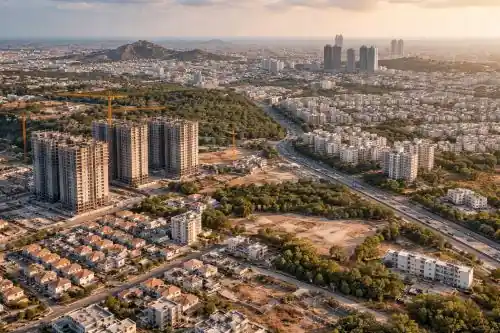
The pace of change has surprised even long-time observers. New residential clusters, commercial hubs, and industrial corridors continue to rise across the outskirts. Areas that once looked rural now connect directly to the city’s economic core. This shift has forced authorities to rethink how they manage growth.
Expansion Pushes Boundaries Beyond Core City
The growth of Hyderabad has moved far beyond its traditional limits. Regions like the western IT corridor, northern suburbs, and eastern industrial belts have seen strong development. Developers have launched large housing projects in these areas. Buyers have responded with strong demand.
This expansion has created pressure on existing control lines. These lines once separated urban zones from rural regions. Today, they struggle to keep pace with fast construction and infrastructure growth. Authorities now face a key challenge. They must update these boundaries to match reality.
Infrastructure Drives the Growth Wave
Infrastructure projects have fueled Hyderabad Expansion. The Outer Ring Road has played a major role. It has improved connectivity between distant areas. Metro expansion plans and new road corridors have added further momentum.
Developers follow infrastructure. They invest in areas that promise easy access and future value. As a result, new townships continue to emerge near highways and transit routes. This pattern has reshaped the city’s growth map.
Officials now work to align infrastructure with planning rules. They aim to avoid unplanned sprawl. However, rapid demand often moves faster than policy updates.
Changing Control Lines and Governance Challenges
Control lines help authorities regulate land use. They define where construction can happen and where it must stop. Hyderabad Expansion has blurred these lines. In many cases, development has crossed earlier limits.
Urban planners now face complex questions. Should they extend control lines? Should they create new zones? Each decision affects land value, taxation, and public services.
Local governance systems also feel the pressure. Municipal bodies must expand their reach. They need to provide water, roads, and waste management to newly developed areas. This expansion requires strong coordination between agencies.
Impact on Real Estate and Land Prices
Hyderabad Expansion has boosted the real estate sector. Land prices have increased in peripheral areas. Investors see strong potential in upcoming zones. Many buyers prefer these locations due to lower costs and better future returns.
At the same time, rising prices create challenges. Affordable housing becomes harder to achieve in rapidly growing regions. Authorities must balance growth with inclusivity. They need to ensure that development benefits all sections of society.
Environmental Concerns Grow Alongside Development
Rapid expansion often brings environmental risks. Green spaces shrink as construction increases. Lakes and water bodies face encroachment in some areas. Experts warn that unplanned growth can harm the city’s long-term sustainability.
Hyderabad Expansion must address these concerns. Planners need to protect natural resources. They must enforce regulations that limit environmental damage. Sustainable development has become essential for the city’s future.
Technology and Smart Planning Solutions
Authorities have started to use technology to manage growth. Geographic Information Systems (GIS) help track land use changes. Digital mapping tools provide accurate data for planning decisions.
Smart city initiatives also support better governance. They improve service delivery in newly developed zones. These tools allow officials to respond quickly to urban challenges.
Hyderabad Expansion now relies on data-driven planning. This approach helps reduce errors and improves coordination among departments.
Future Outlook: A City Redefined
Hyderabad Expansion will continue to reshape control lines in the coming years. The city stands at a critical point. It must balance growth with planning discipline.
Strong policies can guide this transformation. Clear zoning rules, updated control lines, and efficient governance will play key roles. Public participation will also matter. Citizens must stay informed and involved in planning decisions.
The city has a unique opportunity. It can build a model for sustainable urban growth. If managed well, Hyderabad Expansion can create a balanced and inclusive future.