
The debate around ASHA workers pay has intensified in Hyderabad, as frontline health staff push for fair wages. In one clear demand, workers ask for a fixed monthly salary of ₹18,000 along with job security. This issue now draws attention from policymakers and the public alike.
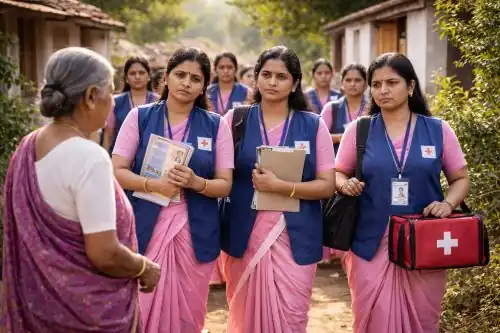
Rising Concern Over Low Earnings
ASHA workers play a crucial role in India’s healthcare system. They connect local communities with hospitals and clinics. Moreover, they support vaccination drives and maternal health programs. Despite such responsibilities, their earnings remain inconsistent.
Instead of a stable salary, most workers depend on incentives. As a result, income varies each month. In many cases, payments arrive late, which creates financial stress. Therefore, workers continue to demand a predictable and fair wage structure.
Protests Gain Momentum
In recent days, protests have spread across Hyderabad. Groups of ASHA workers gathered near administrative offices. They raised slogans and displayed banners highlighting their concerns. At the same time, union leaders emphasized the urgency of the situation.
Furthermore, these demonstrations have remained peaceful. However, the message stays strong and consistent. Workers want recognition for their efforts and equal treatment within the public health system.
Clear and Focused Demands
ASHA workers have presented a structured list of demands. These requests aim to improve both livelihood and dignity. Key demands include:
- Fixed monthly salary of ₹18,000
- Formal job security under government policies
- Timely release of pending incentives
- Access to health insurance
- Retirement and social security benefits
Notably, these demands reflect long-standing concerns. Workers believe these changes will improve both morale and service delivery.
Why ASHA Workers Pay Needs Reform
ASHA workers handle field-level responsibilities every day. For instance, they assist pregnant people, monitor child health, and spread awareness about diseases. In addition, they often travel long distances to reach remote areas.
Even so, their compensation does not match their workload. Consequently, many workers struggle to manage household expenses. Fair pay, therefore, becomes essential for sustaining this workforce.
Government’s Position
Officials have acknowledged the demands raised by ASHA workers. They have indicated that discussions are underway. Meanwhile, budget limitations continue to pose challenges.
On one hand, authorities defend the incentive-based model. On the other hand, workers argue that their duties require full-time commitment. Hence, both sides need to find a balanced solution.
Impact on Healthcare Services
The role of ASHA workers directly affects public health outcomes. If protests continue, essential services may face disruptions. For example, vaccination campaigns could slow down. Similarly, maternal and child healthcare support might weaken.
Therefore, resolving this issue quickly becomes important. A satisfied workforce can deliver better healthcare services. In contrast, ongoing dissatisfaction may reduce efficiency.
Voices from the Field
Several ASHA workers have shared personal experiences. One worker explained how she spends her own money on travel. Another highlighted the challenge of delayed payments.
Although they take pride in serving communities, financial struggles remain a constant concern. Their stories underline the urgent need for reform.
The Way Forward
The discussion around ASHA workers pay continues to evolve. Both the government and worker unions must engage in constructive dialogue. In addition, policymakers need to consider long-term benefits rather than short-term costs.
If authorities accept the ₹18,000 demand, it could create a positive shift. Other states may also follow similar reforms. Ultimately, such a move would strengthen grassroots healthcare across the country.
For now, Hyderabad stands at the center of this movement. The coming weeks will likely shape the future of ASHA workers and their role in India’s healthcare system.