
The LPG shortage protest in Hyderabad turned tense on Monday as auto drivers escalated their agitation. The crisis over fuel supply pushed many drivers to take extreme steps. Several protestors climbed a mobile tower to draw attention. This dramatic act shocked commuters and officials alike.
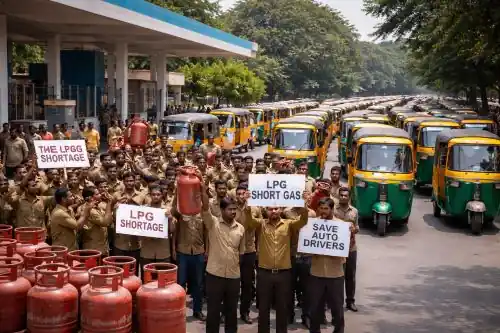
Auto-rickshaw drivers depend heavily on LPG for daily earnings. Many drivers waited for hours at filling stations. They struggled to get even a small amount of fuel. Long queues stretched across major parts of the city. Tempers flared as supply failed to meet demand.
Fuel Crisis Sparks Anger Among Drivers
Drivers voiced frustration over repeated shortages. They claimed the issue has continued for several days. Many said they lost daily income due to fuel unavailability. Some drivers could not operate their vehicles at all. This situation created financial stress for families.
The LPG shortage protest gained momentum near busy routes. Areas close to the PVNR Expressway saw heavy gathering. Protestors blocked roads and slowed traffic movement. Police reached the spot to manage the situation. They urged drivers to remain calm and avoid risky actions.
Tower Climb Intensifies Situation
A group of drivers climbed a telecom tower during the protest. They demanded immediate intervention from authorities. This move raised safety concerns among officials. Emergency teams rushed to the location. Police began negotiations to bring them down safely.
The protestors shouted slogans and highlighted their problems. They demanded a steady LPG supply at fair prices. Many insisted that the government must act quickly. They refused to step down until officials responded.
Impact On Commuters And Traffic
The LPG shortage protest disrupted daily life in Hyderabad. Office-goers faced delays due to traffic congestion. Public transport options became limited in some areas. Auto services remained partially unavailable. This added pressure on other transport systems.
Passengers struggled to find rides during peak hours. Many turned to app-based cabs, which increased fares. The ripple effect of the protest affected thousands of commuters. Businesses also reported minor disruptions.
Authorities Step In To Control Protest
Police teams acted quickly to control the crowd. They cleared blocked roads and restored traffic flow. Officials spoke with union leaders to address concerns. Discussions focused on resolving supply issues.
Authorities assured drivers that they would review the situation. They promised to coordinate with gas distributors. Efforts aimed to improve LPG availability in the coming days. However, drivers demanded immediate results.
Root Cause Of LPG Shortage
Experts link the shortage to supply chain disruptions. Global factors have affected fuel distribution networks. Increased demand also added pressure on existing supply. Local distribution challenges worsened the situation.
Transport workers rely on consistent fuel access. Any disruption directly impacts their income. The current crisis exposed gaps in supply management. It also highlighted the need for better planning.
Drivers Demand Long-Term Solutions
Auto unions stressed the need for long-term solutions. They urged the government to ensure regular LPG supply. They also requested price stability to avoid sudden hikes. Drivers want a system that supports their livelihood.
Union leaders warned of further protests if issues remain unresolved. They plan to continue demonstrations if needed. Their demands focus on both availability and affordability.
Public Reaction And Growing Concern
Residents expressed concern over the escalating protest. Many supported the drivers’ demands. They acknowledged the difficulties faced by transport workers. However, they also worried about safety risks.
Climbing towers and blocking roads created panic among locals. Citizens urged both sides to find a peaceful solution. They expect quick action to prevent further disruption.
Conclusion
The LPG shortage protest in Hyderabad highlights a serious issue. Auto drivers depend on fuel for survival. The current shortage threatens their income and stability. Authorities must act fast to resolve the crisis.
A balanced approach can ease tensions and restore normalcy. Timely supply and clear communication will help rebuild trust. Until then, the situation remains sensitive and demands close attention.